Guide to Christmas 2025 in Spain’s Largest Cities
By December 2, 2025 7 min read
Spain transforms the winter darkness into light, music, culture, and touching traditions.
In Spain, Christmas is a colourful mosaic of faith, tradition, family life, and gastronomy. Here, modern city life and spectacular light shows blend with centuries-old symbols, giving Christmas a unique feeling of both the present and history at the same time.
Both locals and tourists find a shared space in nostalgia and celebration, and soon the Christmas lights are switched on in earnest. This marks the beginning of a month filled with life in the streets, bathed in warm, festive light.
Madrid
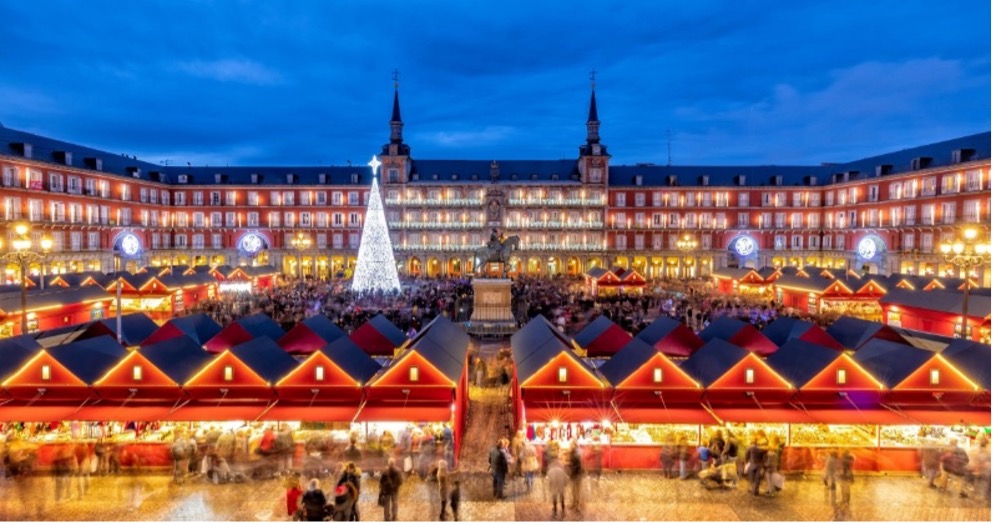
The main attraction is the Christmas market at Plaza Mayor — with over 100 stalls selling nativity figures (Belén figurines), Christmas decorations, gifts, toys, hats, ornaments, and more. The market usually opens at the end of November and runs until the end of December (2025: approximately Nov 25–28 to Dec 31).
In addition to Plaza Mayor, there are often smaller markets and pop-ups around the city (crafts, design, vintage items, Christmas gifts) — perfect if you want to avoid the crowds.
Madrid takes on a special urban Christmas glow with plenty of street decorations, lights, and a general “big-city Christmas atmosphere.”
You can combine the market and shopping with city experiences, museums, cafés, and city life.
In Madrid, the Christmas lights take on the character of large-scale art. In 2025, the city will feature a spectacular video mapping show on the Town Hall facade at Plaza de Cibeles. Over 13 million LED lights across approximately 240 locations create a mélange of modern art, iconic monuments, and creative projects from art faculties. From large portals on Gran Vía to minimalist works in Malasaña and children’s drawings in family neighbourhoods — the entire city becomes an artistic Christmas universe.
Barcelona
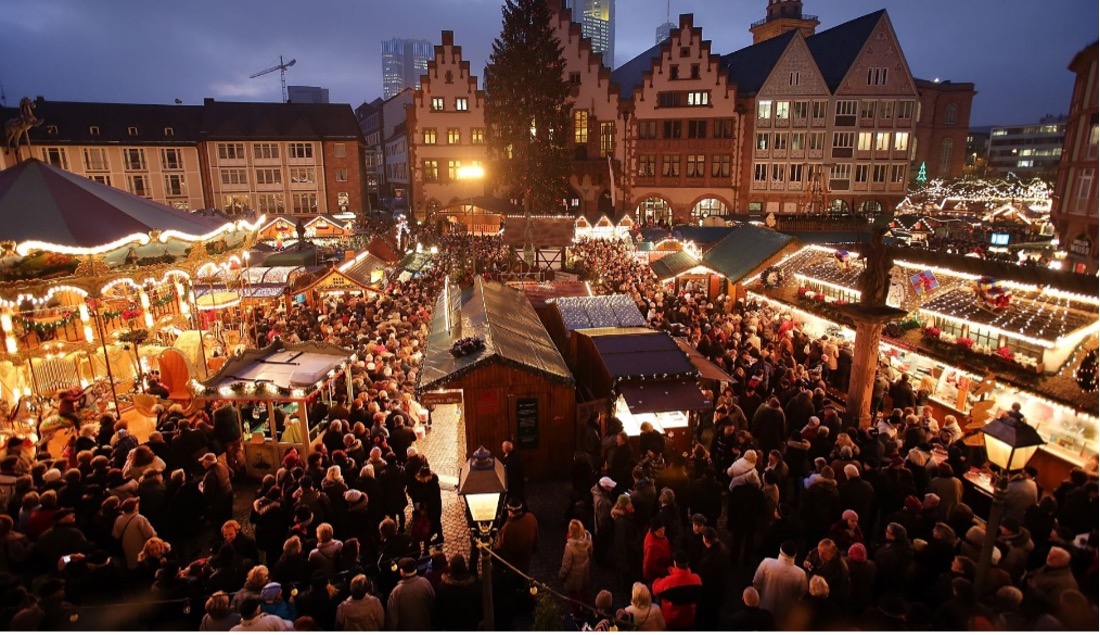
The classic Christmas market experience is found at Fira de Santa Llúcia — Spain’s oldest Christmas market (dating back to 1786) — right by Barcelona Cathedral in the Gothic Quarter. Here you’ll find handmade decorations, Belén figures (including the Catalan “caganer”), Christmas ornaments, trees, gifts, crafts, and small specialties like turrón.
The market is part of a larger Christmas experience with decorated streets, lights, and often music or activities in the streets — the base for a festive and tradition-rich Christmas in the city.
The 2025 edition is expected to run from around Nov 28 to at least Dec 23 — some sources mention a possible extension into early January.
If you want to combine the market with city life: Barcelona is perfect, with its architecture, historic neighborhoods, gastronomy, and overall urban atmosphere.
Málaga
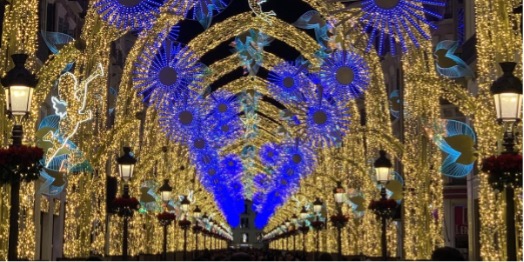
In Málaga, Christmas lights and decorations are the city’s main attractions — for example on Calle Larios, where the 2025 Christmas lights are turned on with a spectacular show at 7:00 PM, featuring three daily performances (lights + music) until Jan 6.
Málaga competes annually with major cities like Paris and London with its impressive Christmas lights. The city illuminates with 2.7 million LED lights, themed ornaments, and musical light sequences on Calle Larios. The installation ‘Natividad de luz’ includes 16 stars, 32 columns, and 32 “beams,” with decorative motifs that tell the story of Jesus’ birth. The show runs from Nov 28 to Jan 5, except Dec 24 and 31, with performances at 6:30 PM, 8:30 PM, and 10:00 PM.
The lights extend across streets and major squares — including Plaza de la Constitución, Alameda Principal, Paseo del Parque, etc. The atmosphere turns the city into a large, decorated Christmas space.
Although Málaga doesn’t necessarily have one “classic” Christmas market like Madrid or Barcelona, the city thrives on a combination of decorated streets, lighting, shops, cafés, and urban life — making it popular for those seeking a “sunny city Christmas” with warmth, decorations, and festive spirit.
Lighted trees, tunnels, and Christmas events
In Fuengirola on the Costa del Sol, Christmas lights are turned on at Plaza de España, guaranteeing a “lit-up December experience” with 2.5 million LED lights and new visual installations that create an almost cinematic atmosphere.
The city’s most romantic new feature is a grove of glowing cherry trees at Plaza Pedro Cuevas, glowing pink and purple — like a Japanese hanami in December. Additionally, a 36-meter-long light tunnel is constructed, with shows and music every half hour.
Fuengirola offers 95 different Christmas activities in total, from children’s theater and gospel concerts to markets, skating shows, charity booths, and craft workshops — a true gathering point for both locals and visitors from Northern Europe.
Valencia
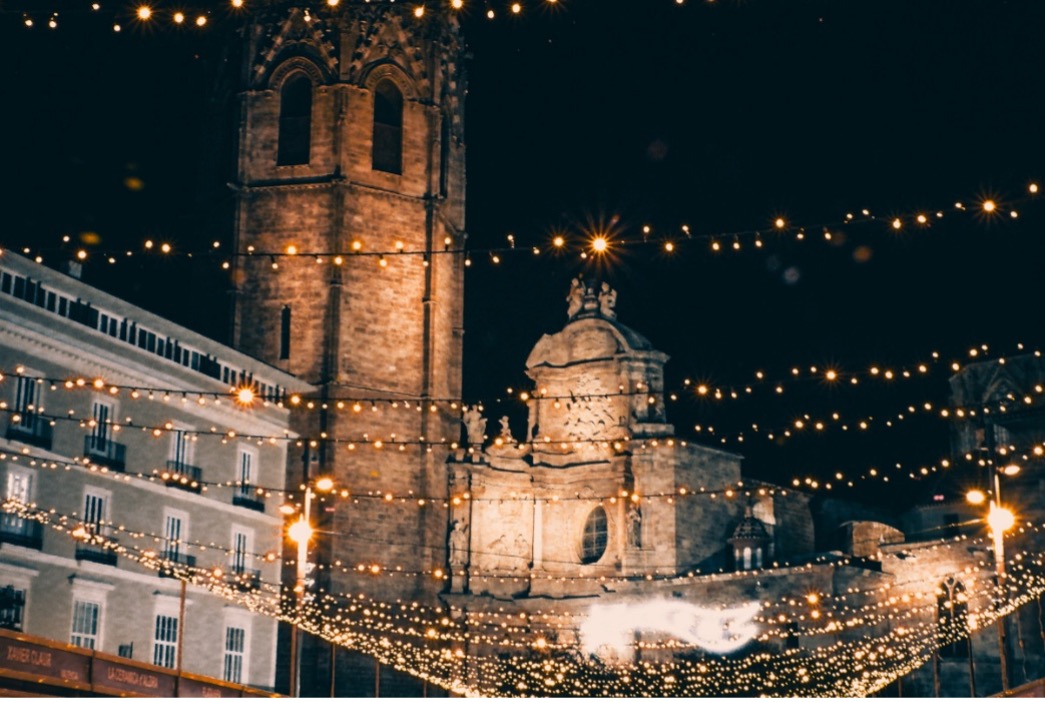
At the City of Arts and Sciences, you’ll find a modern Christmas market — with stalls selling crafts, wooden ornaments, local specialties, and space for workshops and activities.
There is also often a smaller Christmas market on Plaza de la Reina with 20–30 stalls offering local crafts, gifts, and decorations.
The markets typically run from late November until around 6 January, covering Epiphany celebrations.
A good option if you want a combination of Christmas market + city + architecture + mild weather — Valencia offers both tradition and modern city life.
Alicante
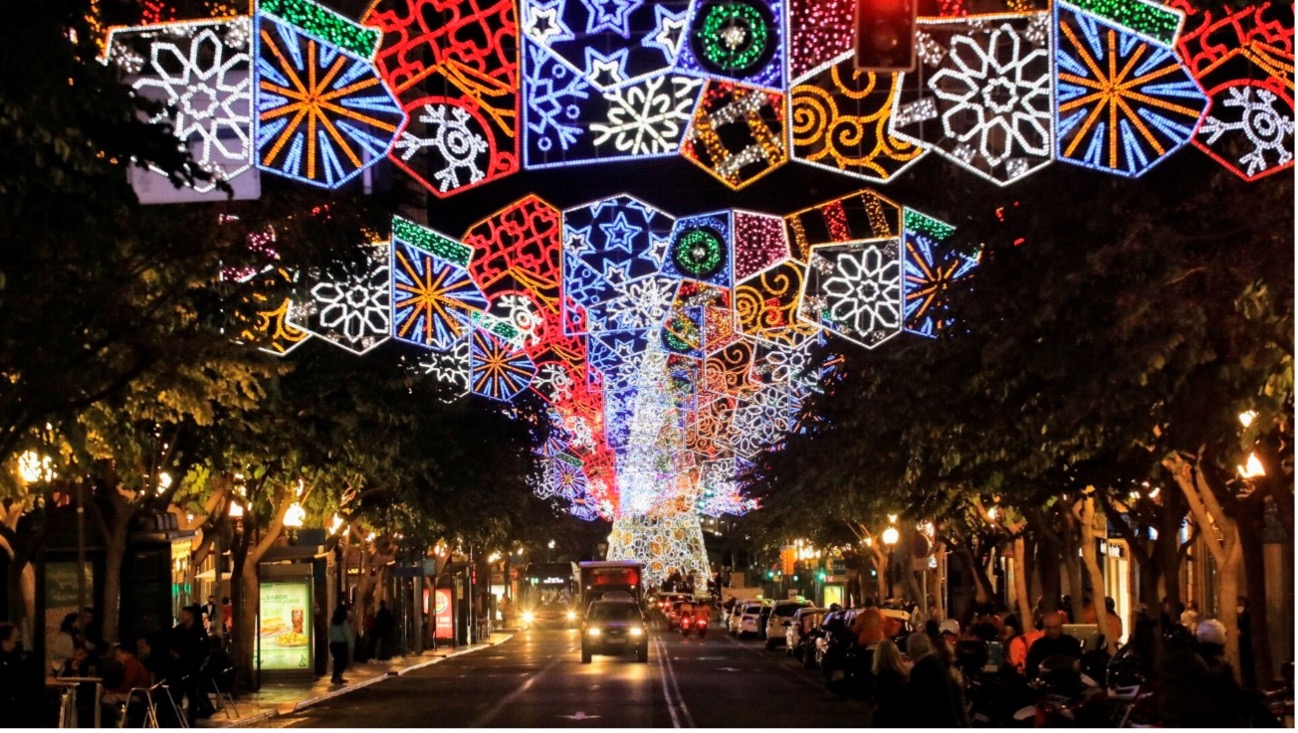
In 2025, the city will light up Christmas decorations with 2.6 million LED lights, a large Christmas tree, and decorative elements across many streets and squares.
Over 60 Christmas and festive activities are planned between November and January — markets, decorations, events, and activities for children and families.
Municipal markets (like Central Mercat, Babel, Benalúa, Carolinas) are decorated with Christmas themes — some even include Santa Claus visits and pre-Christmas events.
Although Alicante doesn’t have a single large Christmas market tradition like Plaza Mayor in Madrid or Fira de Santa Llúcia in Barcelona, the city is active with lights, events, and market activities, especially for families and locals.
Lights, festivities, and salt in Torrevieja
As November ends, Torrevieja (Alicante) is bathed in warm, colorful light. The city’s identity is closely linked to salt production, and the local corte salinera — the salt queens — participate in the ceremony turning on the city’s main Christmas lights, symbolizing traditions passed down through generations.
Thousands of families, retirees, expats, and winter tourists gather at Plaza de la Constitución in front of the church to celebrate the arrival of Christmas, while drummers, street performers, dancers, and a DJ create a festive atmosphere long before the official ceremony.
The lights stretch along Calle Concepción and Calle Caballero de Rodas, where cafés serve hot chocolate, churros, and caldito. Tourists, who usually associate Torrevieja with summer, experience the city in Christmas attire — still light clothing during the day, but with December coziness in the air.
On the Juan Aparicio promenade stands an impressive Christmas tree of around 20 meters, a popular photo spot for family portraits and Christmas cards. Later in December, a large Christmas tree, always donated by the Scandinavian resident group, is erected in the city center as a symbol of integration and cultural coexistence.
Palma de Mallorca (Mallorca)
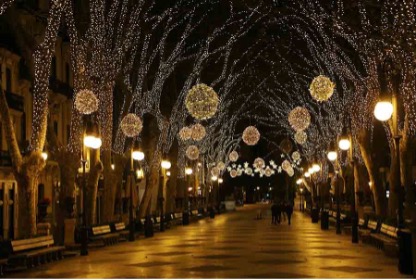
In 2025, the Fira de Nadal Christmas market will be held in Palma de Mallorca — with stalls at Plaza Major, along La Rambla, and in Parc de Ses Estacions. Here you can buy decorations, ornaments, crafts, local products, and gifts.
The market is expected to open around 23 November 2025 and run until about 7 January 2026, offering a long Christmas season.
In addition to the stalls, there are family-friendly areas with food trucks, children’s workshops, a Christmas tree, and a general atmosphere that blends holiday spirit with Mediterranean vibes.
There are also additional local markets, events, Christmas concerts, culture, and activities in the city as part of the Christmas program — Palma aims to become a true “Christmas city” in Mallorca.
Spanish Christmas Symbols
Christmas in Spain is closely linked to Catholic traditions, medieval history, and local folklore. Many symbols are older than the Nordic Santa Claus and elf traditions.
The nativity scene as a national Christmas icon
The nativity scene, called Belén after Bethlehem, became popular in the 18th century under King Carlos III and can be found in almost every home, town hall, church, and shop. The largest installations fill entire rooms with miniature towns, mountains, markets, and running water. On Gran Canaria, nativity scenes are made of sand, while Alicante hosts the world’s largest.
The Three Kings — not Santa Claus
Christmas culminates on Epiphany, January 6, when children receive gifts, and colourful parades fill the streets. In Spain, it is Los Reyes Magos — Caspar, Melchior, and Balthasar — who bring gifts on the night of January 5. The parade, called Cabalgata, the evening before, is the highlight of the year for many children and their families.
Christmas sweets with Moorish heritage
Turrón is Spain’s signature Christmas candy, made of honey, almonds, and egg whites, with soft and hard varieties. Modern versions include chocolate, caramel, and pistachio.